

Why is media literacy important?
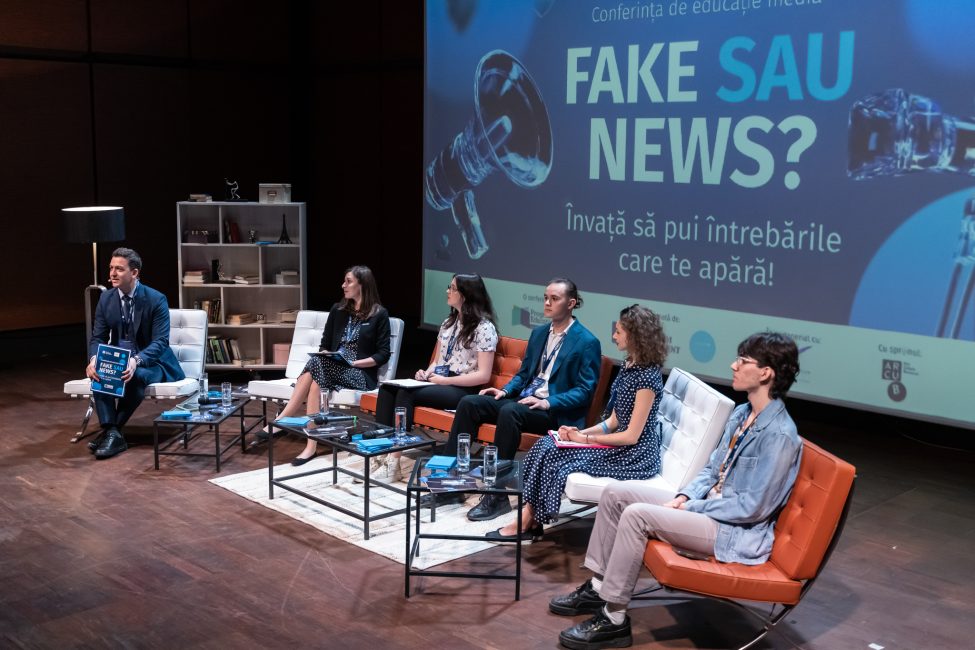
The conference “Fake or news? Learn to ask the questions that protect you”
What is the essential skill you need in order to navigate the informational chaos of these days? Asking the right questions. The first of these questions, “fake or news?”. Is it a false information or a piece of news? Because only if we ask such questions, can we train our critical thinking for times of crisis and navigate difficult contexts more easily.
This was the idea we had in mind for the second edition of the media literacy conference. The conference “Fake or news? Learn to ask the questions that protect you” is part of the Media Literacy Programme, is signed by the Center for Independent Journalism and UNICEF, and was made possible with the support of the Romanian-American Foundation.
The conference from 20 May 2023 brought together teachers, young people, NGOs, journalists and anyone interested in media literacy. We presented the European and national context on media literacy, with the challenges and successes of the past two years, and discussed the way media literacy prepares young people to withstand times of crisis.
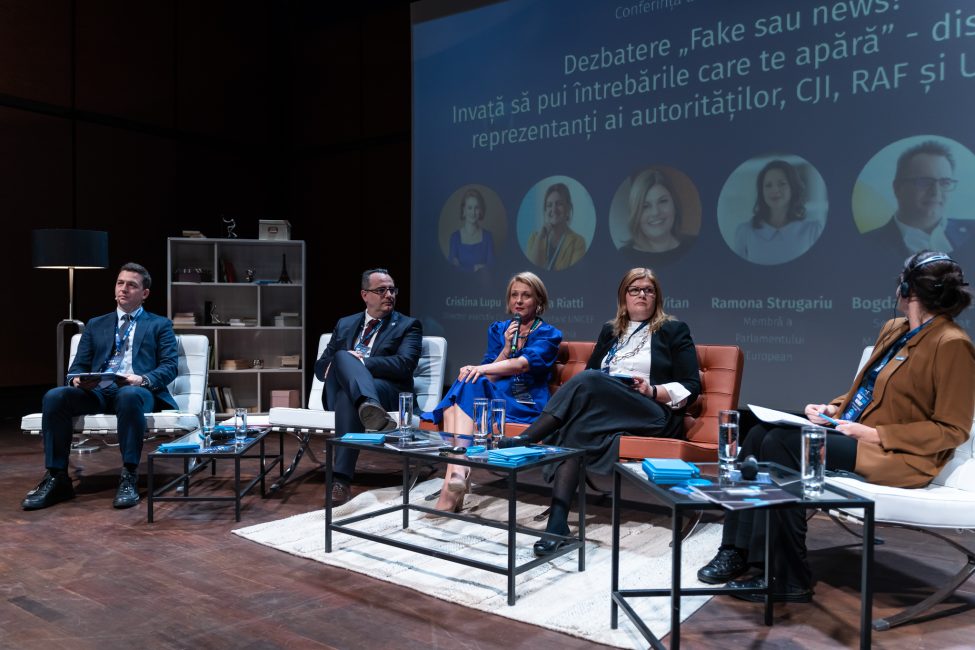
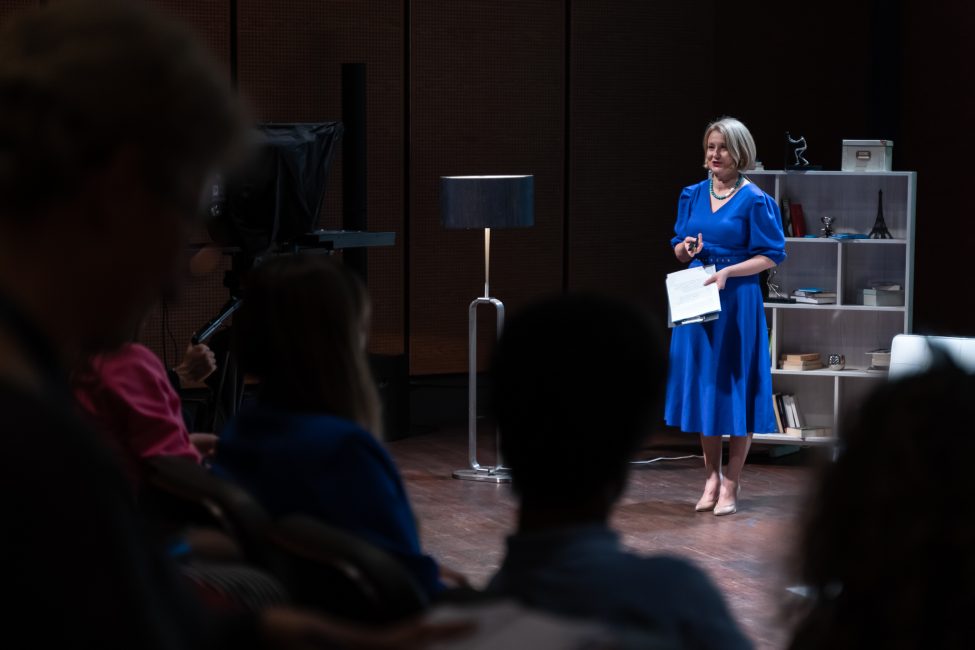
“We need everyone at the table. I’m glad to have the Ministry of Education, European representatives with us. I would go for the development of transversal skills. Media literacy is about how we think. That’s what schools should do.” This is how the debate with representatives of the authorities, RAF and UNICEF members started, which was opened by Cristina Lupu, Executive Director of CIJ.
Asked why media literacy is vital nowadays, Despina Andrei, Communication and Fundraising Manager for UNICEF Romania answered that “media literacy is crucial for children because it helps them cope with this infodemic period that we are all going through”. Also from UNICEF’s perspective, media literacy is “an essential skill for children and young people” which helps them become active citizens in society and it’s a 21st century skill that should be taught in schools, according to Anna Riatti, UNICEF Representative in Romania.
Bogdan Cristescu, Secretary of State in the Ministry of Education, spoke, from a teacher’s perspective, about the need to have media literacy in schools: “Media literacy is extremely needed in schools. Our programme is an essential step to prepare young generations for crises like the ones we have just gone through, the pandemic, war and other challenges. We need media literacy in order to know how to protect ourselves from bullying, from hate speech. The efforts that the CIJ and UNICEF are making in training teachers from 10 universities, so that the new generations can bring media literacy into the classroom, should be recognised. […] We are sending a message even through the ringtone on the phone that rings during breaks. We need to know that and take care of our role as teachers.”
Media literacy in European context
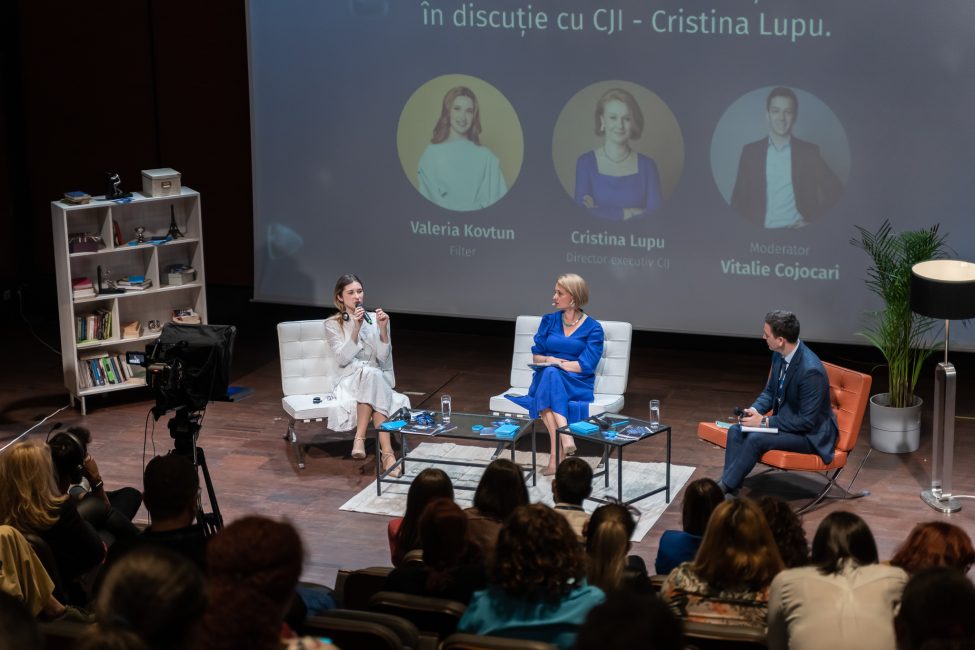
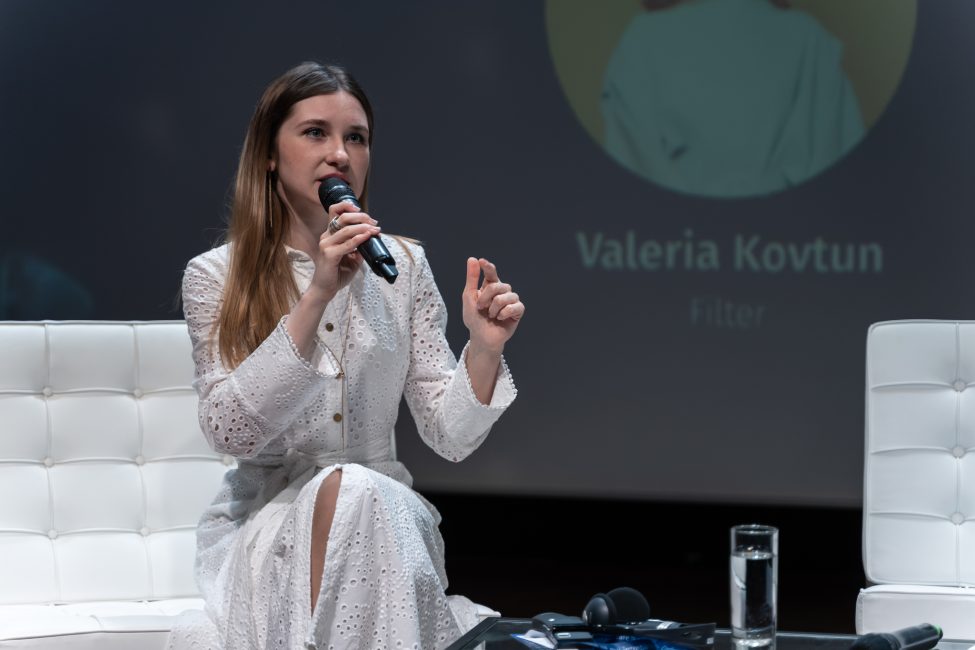
The way to do media literacy was also addressed from a broader perspective in the discussion with Valeria Kovtun, founder of the Ukrainian media literacy programme, Filter. She talked about the need of media literacy in the school curriculum since 2008 and how important media literacy became when the war started. “In Ukraine, this (a.n.: media literacy) is vital, because it is primarily about personal safety and the safety of our loved ones.”
Media literacy workshops
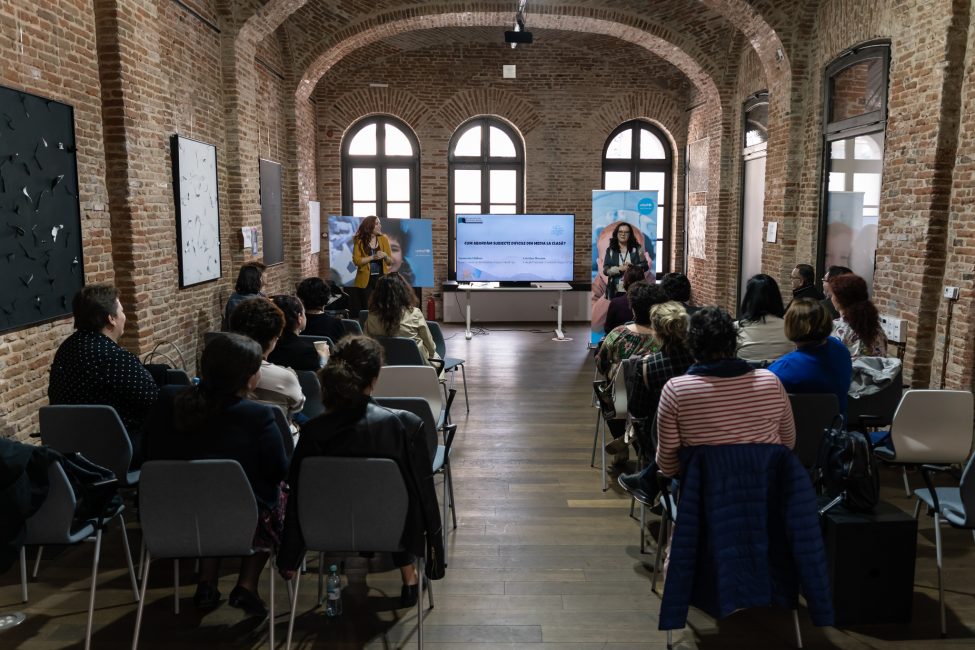
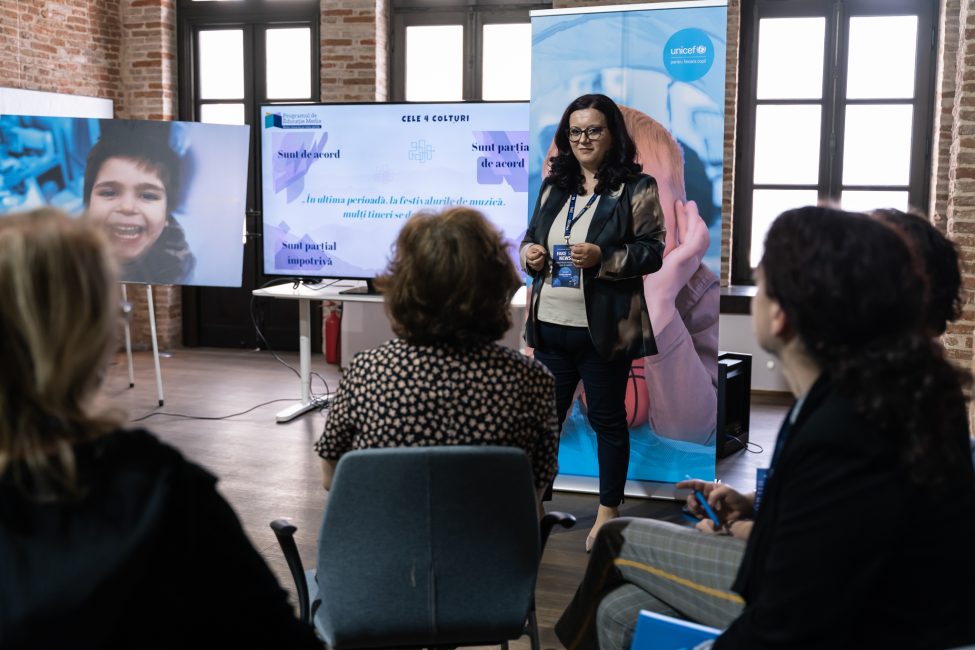
In the second part of the conference, we organised three workshops for the participants. One of the workshops for teachers, “How do we tackle difficult media topics in the classroom?“, was held by Anamaria Ghiban and Cristina Mocanu, teachers and trainers in CIJ’s media literacy programme.
Anamaria Ghiban believes that media literacy is necessary for both adults and students: “Media literacy is vital because otherwise I think we would get lost in the informational chaos around us, and media literacy is vital because we live in a world where our children need to be guided in everything that happens around them and need to make connections with their everyday lives.” Cristina Mocanu talked about why teachers need to infuse media literacy concepts: “because teachers themselves need the tools that media literacy provides, in order to be informed and further on, to help students navigate media.”
Teachers were also able to participate in the workshop “How do stories construct our reality?”, held by Oana, active alumni in the Children’s Board, and Dragos, a member of the Children’s Board. “All the words and all the images circulate at a breathtaking speed and it is very important to make sure that we really know what kind of information we come in contact with, that we know how to inform ourselves properly, how to select the information and, furthermore, that when we multiply it, we multiply it in a correct form”, said Oana. Dragoș spoke during the panel with the Children’s Board, the National Council of Students and UNICEF about media literacy and its role in teaching us how to filter information and how to step back and double check what we read.
Media literacy through the eyes of the teenagers
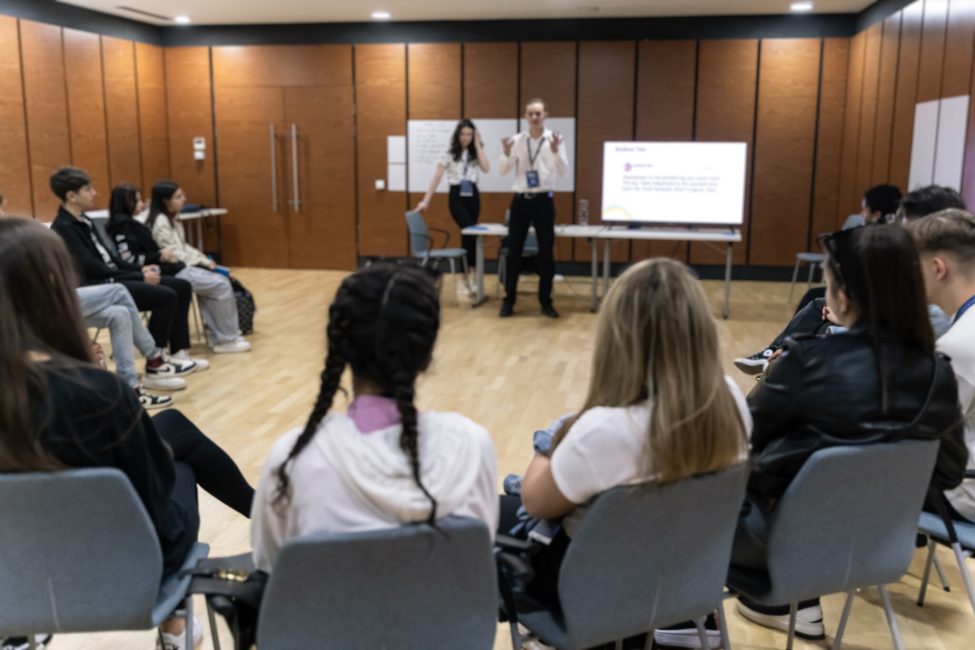
Young people attending the conference took part in the workshop “How can we protect ourselves? All about Biases“, where they met Rafaela, Vice-President of the National Council of Students, and Mihnea, Vice-President of the Suceava County Council of Students. Rafaela sees media literacy as necessary in the fight against misinformation: “Considering the fact that we are bombarded daily with a lot of information and some of it is false, it is very important to be media literate, because we end up being affected by that information and if we don’t learn effective techniques to filter it before processing it as true, we are very, very prone to fall into the trap of misinformation and manipulation.
The Media Literacy Conference is a recurring event organised by the CIJ since 2021 in order to promote media literacy. In the Media Literacy Programme, CIJ has trained 454 teachers who have worked in classrooms with more than 60,000 students. The information provided in the multiplication activities reached more than 4,500 teachers and over 100,000 students from all cycles of study.
