
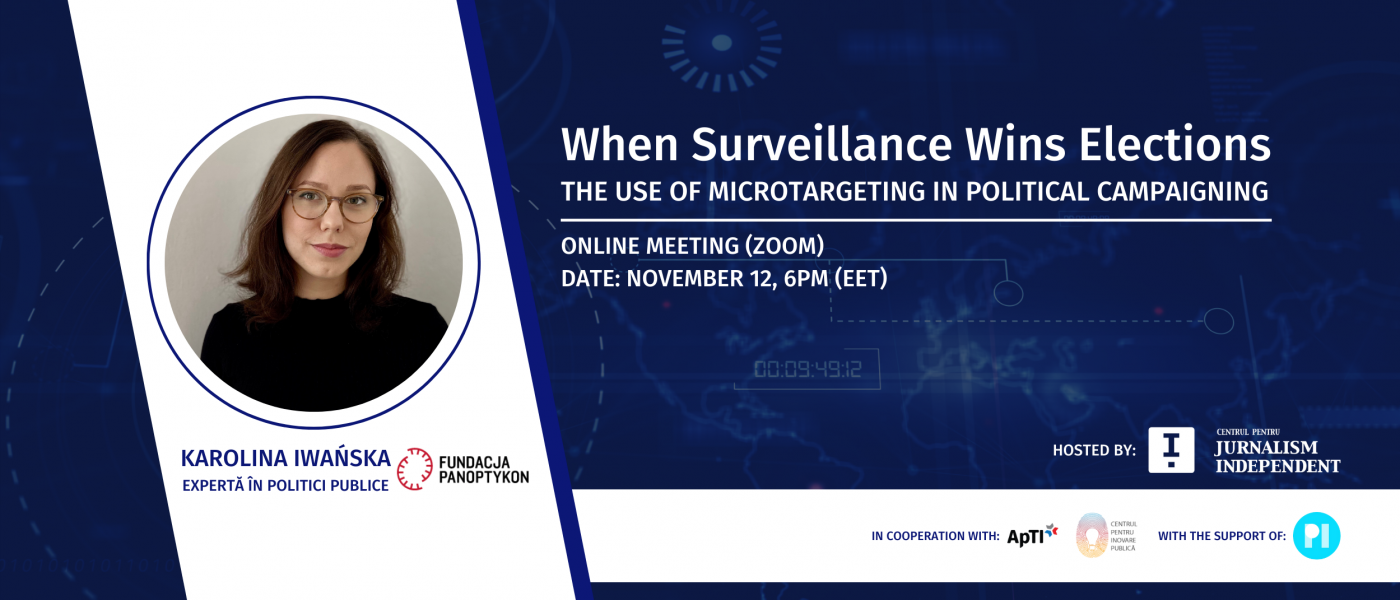
When Surveillance Wins Elections: The use of Microtargeting in Political Campaigning
Political campaigns increasingly use sophisticated strategies fuelled by people’s personal data. One of these techniques is microtargeting: using voters’ data to divide them into small, niche groups and target them with messages tailored to their characteristics (such as psychometric profiles).
Beginning in 2018, on the heels of the Cambridge Analytica scandal, conversations about the scale and impact of political microtargeting began to significantly fuel the news cycle and shape the political agenda. The EU began its war on disinformation and convinced leading internet platforms, including Facebook, to self-regulate. These events raised a few questions:
- Is it possible to target people based on their vulnerabilities, using only Facebook data?
- How does political microtargeting differ between the U.S. and Europe, given Europe’s more modest advertising budgets, stronger legal protections, and varied political cultures?
- Who decided which ads users see?
- Does the use of political microtargeting call for new legal rules?
The Center for Independent Journalism, in cooperation with the Association for Technology and Internet and The Center for Public Innovation, with the support of Privacy International, invites you to a presentation held by Karolina Iwańska, policy analyst at Panoptykon Foundation (Poland), on the subject of microtargeting in electoral campaigning.
The presentation will take place online (Zoom) on Thursday, the 12th of November, starting at 6pm (EET), Q&A session included.
Willing participants can access the event by registering at the following link: https://us02web.zoom.us/meeting/register/tZwkdumgrDguGNRJmaqzjXM-B6j9rKdA53L-
Presentation description:
A study conducted during two consecutive elections in Poland and published in 2019 by Panoptykon Foundation, in collaboration with ePaństwo Foundation and SmartNet Research & Solutions, exposes the roles of different actors in the process of delivering political ads on Social Media. In particular, they prove that Facebook plays a key role in determining which ads will reach specific users and highlight the shortcomings of Facebook’s transparency policies and of the Polish electoral law.
This topic is particularly relevant during the pandemic – when traditional forms of electoral campaigning are hampered, politicians and other political actors are likely to spend even more money on online advertising, hoping to reach and convince the right people at the right time. The presentation will explain how political microtargeting on Social Media works, what are the risks and challenges related to it, and what conclusions and lessons can be drawn from the Polish study.
Speaker:
Karolina Iwańska is a lawyer and policy analyst at Panoptykon Foundation – a Warsaw-based NGO advocating for freedom and human rights in the surveillance society.
Panoptykon diagnoses threats resulting from surveillance practices, intervenes when digital rights are abused, develops and advocates for alternative legislative solutions, stimulates critical reflection, and encourages action for change.
Karolina’s work focuses on corporate surveillance and how online platforms and other companies use personal data to profile, target, and influence people.
She is a 2019/20 Mozilla EU Tech Policy fellow working on behavioural advertising.
For more information, please contact Dumitrița Holdiș, Project Manager at CJI, at e-mail: dumitrita@cji.ro
